As-salamu alaykum. We're happy to feature inspiring stories of Muslim creatives from around the world. From filmmaking to poetry to news reporting, each of these creatives are putting their unique spin to storytelling and showing the world what it means to own your narrative.
Let's dive in!
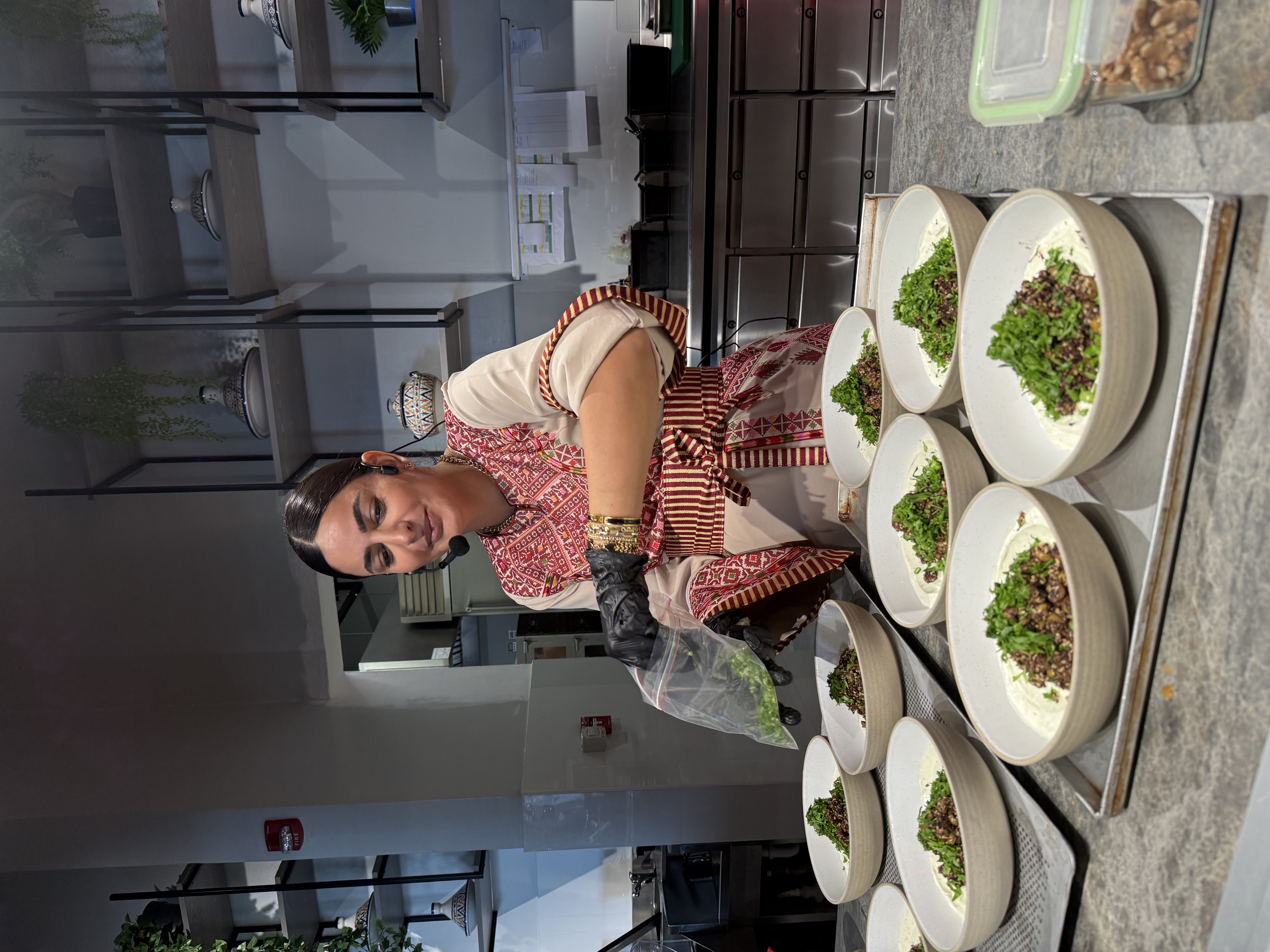
Creative of the Week: Isra Abu Zayed
Meet Isra Abu Zayed, a cultural curator and storyteller rooted in the rhythms, rituals, and resilience of Palestinian life. Through Zeit Bladi, the grassroots initiative she founded, she celebrates ancestral foodways and collective memory. Bringing Palestinian olive oil to the world while supporting farmers on the ground.
What’s the story behind your creative journey? Tell us how you got started, and what moment made you realize this was your calling?
People often assume social media was the goal. It wasn’t. It was the strategy.
Long before @IsraTalks, I was already immersed in culture. I founded Zeit Bladi, hosted Palestinian cultural experiences, and pursued academic research because I was fascinated by how culture shapes who we are.
The challenge was that very few people beyond those rooms saw that work. Like it or not, people often discover expertise through the people they follow.So I decided to learn that language…but on my own terms.
I wanted to use social media to make culture engaging, spark curiosity, and encourage people to see the world differently. Because the mission has always been much bigger.
How does your cultural or faith background influence your work? We’d love to hear about the unique perspective you bring to your art.
My work exists because I’m Palestinian.
Growing up, I saw culture reduced to headlines and politics, when in reality it’s food, language, rituals, humour, hospitality, and the stories families carry for generations.
My faith has also shaped the way I see people. It reminds me that every person has inherent dignity, and that curiosity is often more powerful than judgment.
Together, they’ve made me deeply interested in how cultures shape the way we think, love, grieve, celebrate, and belong. I love discovering that what feels uniquely Palestinian, Arab, or Muslim often exists somewhere else too, rooted in the same human emotion.
That’s the perspective I try to bring to my work. I don’t create content to tell people what to think. I create it to help them notice the invisible connections between cultures.
What’s a project you’re especially proud of, and why? Walk us through the creative process and why it holds a special place in your heart.
I’m especially proud of founding Zeit Bladi, a grassroots initiative committed to supporting Palestinian farmers and preserving our thousand-year-old olive harvest tradition.
It began with a simple idea: to honor the farmer by packaging and sharing each year’s harvest as a meaningful gift. One that carries the story and resilience behind every bottle of olive oil, and gives back to support the Palestinian farmer to stay rooted within their land.
Over time, Zeit Bladi naturally grew into something much bigger than a product. It became a way for people to connect with Palestinian culture through food and shared experiences rather than through headlines.
For me, that’s the power of culture. Sometimes the strongest way to tell a story isn’t through a speech or a book. Sometimes it’s around a table, sharing a meal and a bottle of olive oil.
If you could collaborate with any artist (living or historical) from the Muslim or ethnic diaspora, who would it be and why?
The biggest dream I can imagein: I’d choose my grandmother as a young girl, growing up in her village in Palestine.
I’d love to spend just one ordinary day with her. To walk through the olive groves, hear the sounds of village life, and experience the home I’ve spent my life imagining and piecing together through memories that aren’t my own.
More than anything, I’d want to meet my grandmother before ethnic cleansing and displacement changed the course of her life. I’d want to see the carefree young woman she once was. To see safety in her eyes and confidence in her steps as she walks on her family’s land, passed down for generation. Then, I’d finally understand what home once feels like. What it feels like to belong.
What’s one misconception about your art form or your community that you’d like to challenge? What do you wish more people understood?
I think one of the biggest misconceptions is that social media is the work.
For many of us, it’s simply the platform. What you see online is often just the tip of the iceberg.
Behind every one-minute video are years of research, lived experience, conversations, projects, and work that may never appear on a screen.
As creators, we’re constantly navigating these platforms strategically because they’re where people discover us today. But they’re not the whole story.
So if someone’s work resonates with you, I encourage you to look beyond the feed. Read what they write, attend their events, explore their projects, and understand what they’re building. That’s where you’ll often find the deepest and most meaningful part of their work.
How can our community support your work and stay connected with you?
If my work resonates with you, don’t just follow me… walk with me.
Notice the stories around you. Ask your grandparents more questions. Learn where your traditions came from. Invite someone from another culture to your table. Become curious.
If enough of us start paying attention, we’ll preserve far more than heritage….we’ll preserve our humanity.
And if you’d like to follow my own journey, you can find me at @isratalks, where I’m exploring culture, identity, and the hidden threads that connect us all.
💌 Stay Connected

Enjoyed this feature? Send others our way. Invite them to subscribe: https://behindthekufi.mykajabi.com/newsletters/behind-the-kufi/subscribe
Who should we feature next? If you have a suggestion, send us an email at [email protected]
Follow us on Instagram, TikTok, & LinkedIn and visit our website, www.kufiproductions.com, for more content throughout the month.
Until next time,
The Kufi Productions Team
Responses